We may earn affiliate income (at no extra cost to you) on the links below.
Science in our homeschool has never started with a lab kit.
It starts with a book.
Before we ever diagram a cell or memorize a definition, we read. We read about birds and bones and black holes. We read about curious naturalists and stubborn inventors. We read stories that make my kids look up from the page and say, “Wait, is that real?”
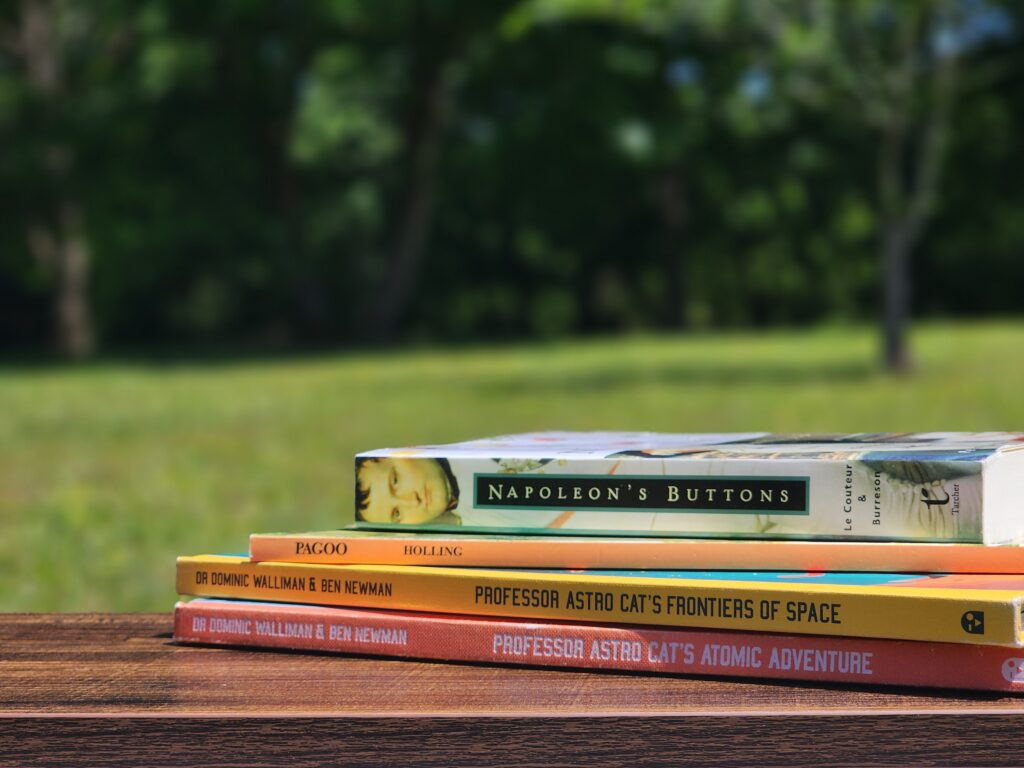
If you’re building a relaxed, literature-rich homeschool, science doesn’t have to mean heavy textbooks and scripted experiments. If you’re new to this approach, start with my guide to living books for homeschooling and how they shape every subject. The right science books can spark curiosity, build vocabulary, and quietly lay a foundation for real understanding long before formal labs ever enter the picture.
This guide gathers the best homeschool science books we’ve actually used across multiple ages, organized by stage and topic. These are living books, narrative nonfiction, and thoughtfully written resources that make science feel like discovery instead of duty.
You don’t need a shelf full of glossy curriculum to teach science well. You need a few excellent books and a rhythm that lets curiosity breathe.
This guide covers the best homeschool science books by age and topic, from preschool through high school.
Table of Contents
What Makes a Great Homeschool Science Book?
After years of reading science books aloud to very wiggly children (and abandoning a few that looked promising but weren’t), I’ve learned something important:
Not every “educational” science book is worth your time.
Some feel like textbooks in disguise. Others overwhelm with facts but leave no room for wonder. The best homeschool science books do something different.
Here’s what I look for before adding a science book to our shelf.
1. It’s Written by Someone Who Loves the Subject
You can tell when an author is genuinely fascinated.
A passionate naturalist writes differently than a committee summarizing information. A scientist telling a story pulls you into discovery. A dry overview pushes you away.
In a literature-rich homeschool, voice matters. If the author sounds alive on the page, your child is far more likely to stay engaged.
2. It Prioritizes Curiosity Over Coverage
Good homeschool science books don’t try to “cover everything.”
They zoom in. They explore one ecosystem, one scientist, one animal, one big idea. They leave room for questions. They invite rabbit trails.
Coverage can come later. Curiosity is harder to build from scratch.
Especially in the elementary years, I would much rather my child be deeply fascinated by birds than vaguely familiar with all vertebrates.
3. It Works Across Ages (When Possible)
In a real homeschool, you’re rarely teaching just one child at one level.
The best science read-alouds allow younger kids to absorb vocabulary while older kids notice bigger patterns and connections. Multi-age flexibility simplifies planning and builds shared conversations across siblings.
If one book can spark discussion at the dinner table for everyone, that’s a win.
4. It Encourages Observation, Not Just Information
The strongest science books make kids look up from the page.
After reading about birds, we notice them differently on walks. After reading about weather, we talk about clouds at the grocery store. After reading about the human body, my kids start narrating their own biology.
A good science book doesn’t end when you close it. It spills into real life.
5. It Doesn’t Require Busywork to “Count”
If a science book only feels legitimate when paired with a 15-page worksheet packet, it probably isn’t doing enough on its own.
That doesn’t mean experiments and notebooks aren’t valuable. We use both. But the book itself should carry weight. It should teach clearly, naturally, and memorably, even without a formal assessment attached.
In our homeschool, books are the backbone. Experiments are the reinforcement, not the other way around.
If this approach resonates, you’ll find more book-centered planning ideas in my full homeschool reading list by age.
How We Test Science Books in Our Homeschool
Before recommending anything here, we’ve used it in real life.
That means:
- Reading it aloud to multiple ages
- Watching attention span and engagement
- Letting kids narrate back what they remember
- Pairing it with light observation (nature walks, sketches, simple discussions)
If a book sparks questions days later, it stays. If it feels like a chore, it quietly leaves the shelf.
Science doesn’t need to be overwhelming to be effective. A handful of strong, narrative-driven science books can build a surprisingly deep foundation, especially in the early and elementary years.
In the sections below, you’ll find our favorite homeschool science books organized by age and topic, so you can start exactly where your family is right now.
Quick Picks (If You Just Want a Few to Start)
If you just want a few solid picks to start, this table will get you 90% of the way there.
| Age Range | Book | Why It Works |
|---|---|---|
| Ages 3–6 | What’s Alive? | Builds the most important early concept: living vs. nonliving. Simple, repeatable, and easy to apply to real life. |
| Ages 4–8 | The Magic School Bus (series) | Covers a wide range of science topics in a fun, memorable way. Great backbone for early and elementary years. |
| Ages 8–12 | The Way Things Work Now | Shows how machines, energy, and physics actually work. Excellent for hands-on thinkers. |
| Ages 10–14 | The Way We Work | Introduces systems thinking through the human body. One of the best “big picture” science books available. |
| Ages 13+ | A Short History of Nearly Everything | Connects science across disciplines and shows how discoveries were made. Ideal for big-picture understanding. |
Want more detail? Keep scrolling — I break these down by age and topic below.
Best Preschool & Kindergarten (Ages 3–6)
Goal: Help young children notice the world, name what they see, and begin asking simple questions.
At this stage, science is not about mastering facts. It is about paying attention. You are building the habit of noticing patterns, asking “why,” and staying curious long enough to look a little closer.
Our Core Picks
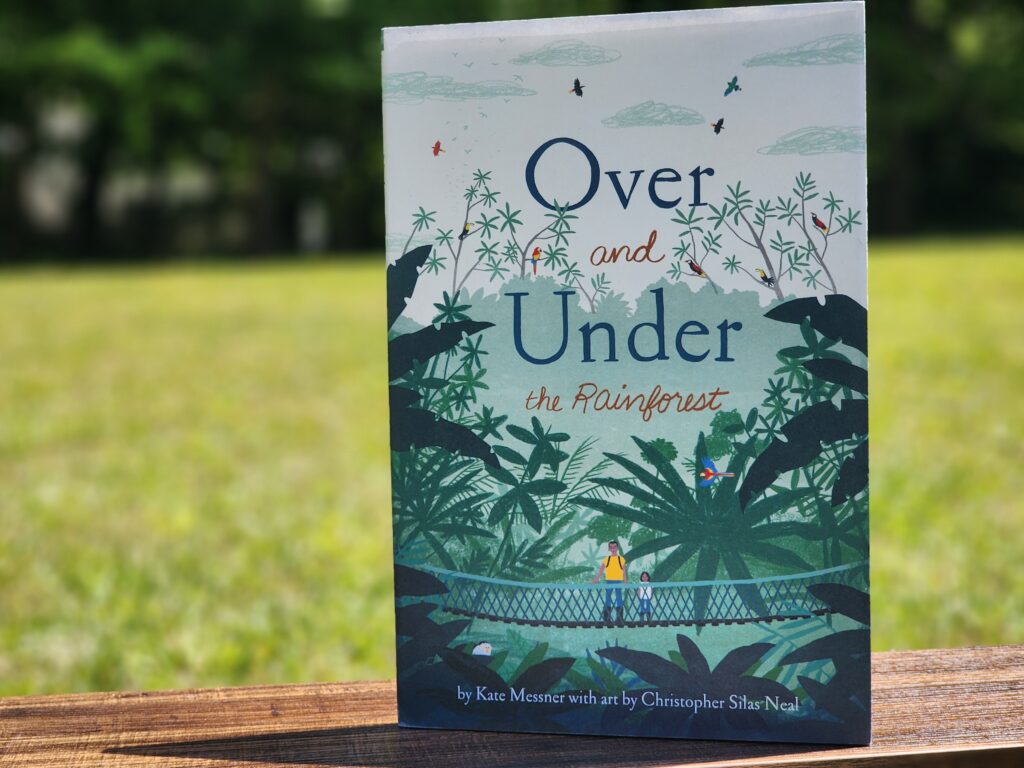
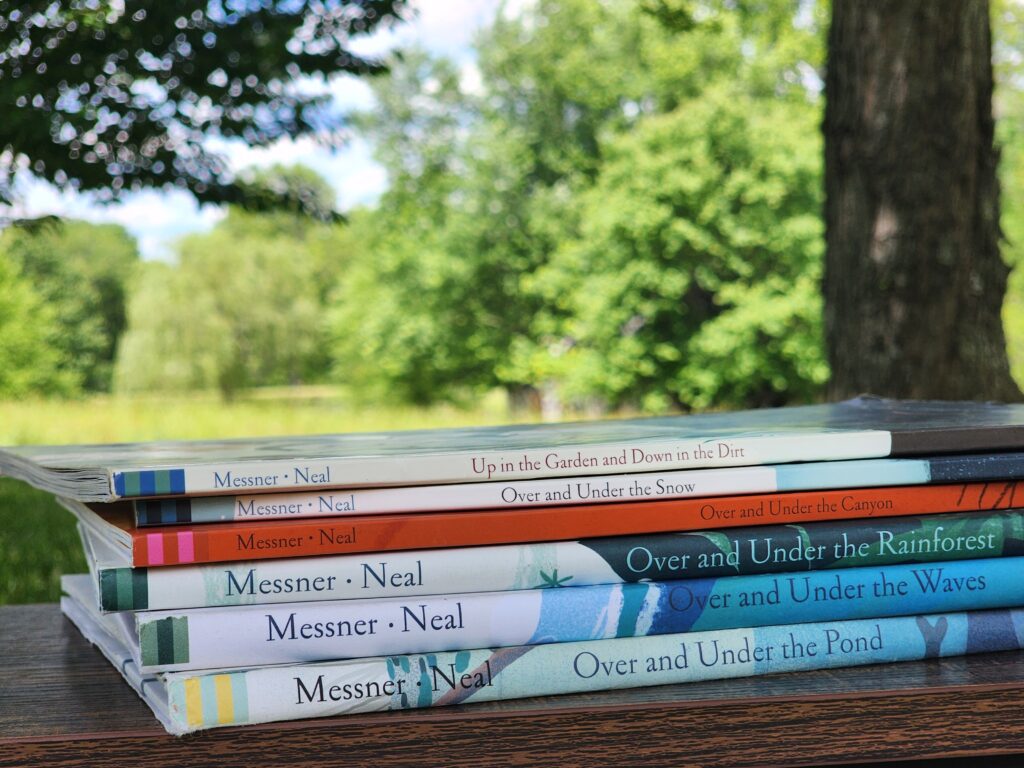
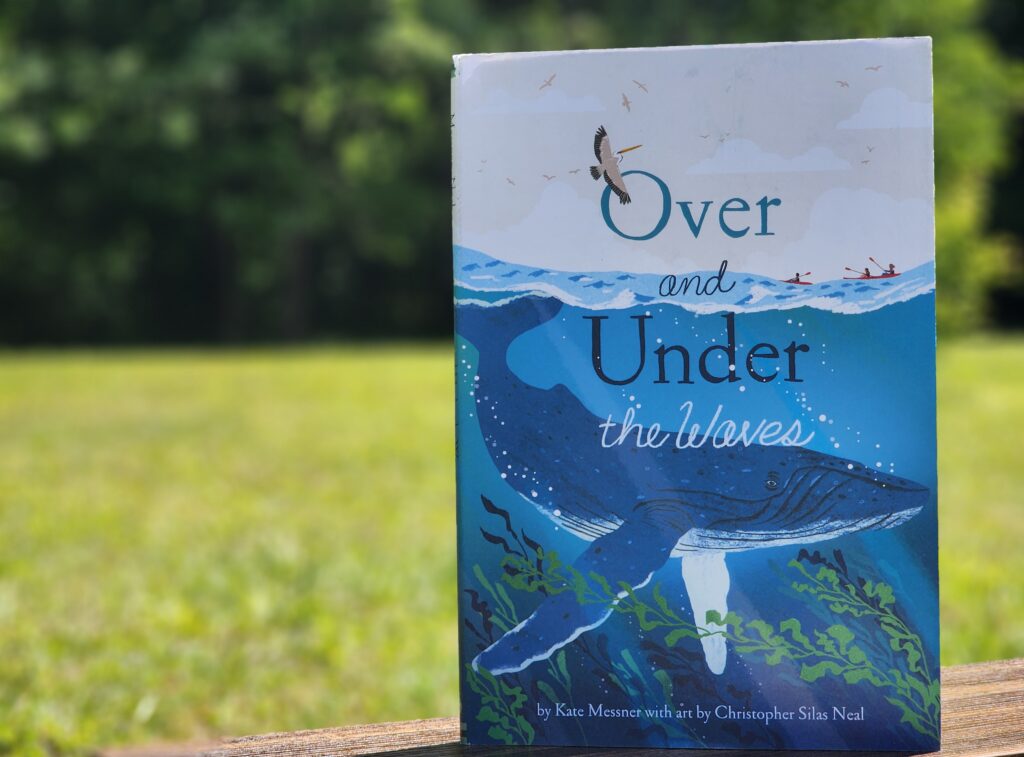
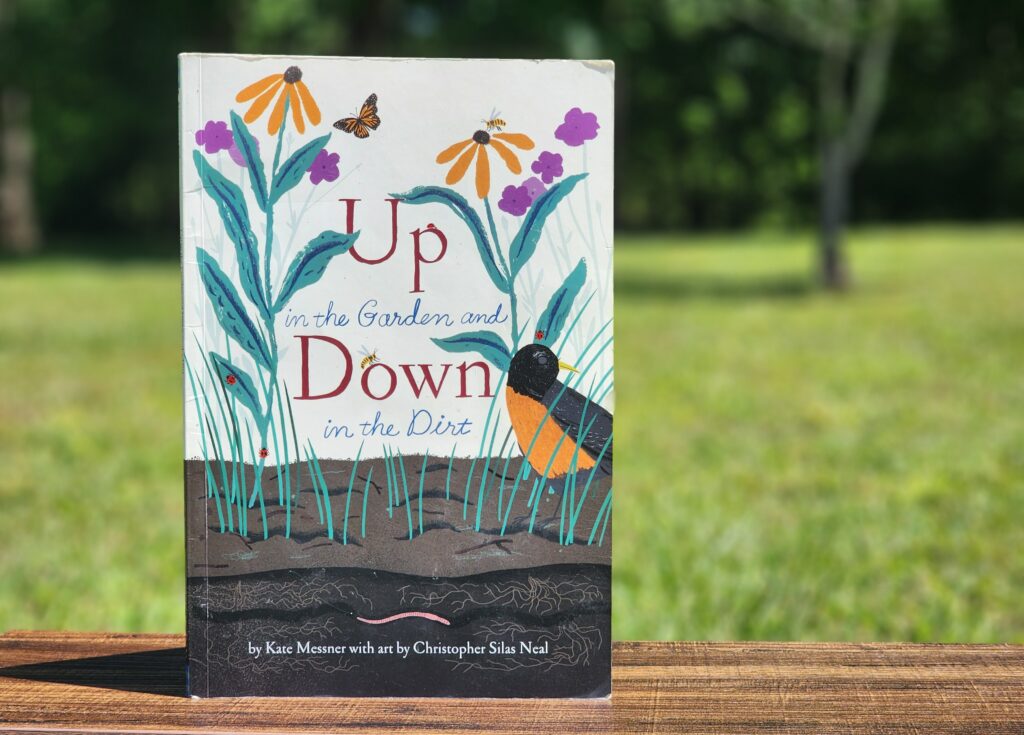
Over and Under Series by Kate Messner
These are some of the richest read-alouds you can use at this age. They quietly introduce ecosystems without turning it into a lesson. Read them like storybooks, not textbooks.
We like to pause and notice the illustrations, especially the “hidden” animals. Let your child pick out animals in the back to read about more in-depth. After a few reads, your child will know a dozen new animals.
What’s Alive? by Kathleen Weidner Zoehfeld
This is one of the best “first science” books because it gives kids a simple, usable framework: living vs. nonliving. Read it slowly and pause often. Ask, “Is this alive?” about things around your house or outside.
Don’t worry about getting every answer right. The value is in the thinking. We’ve found this book works best when you revisit it multiple times over a few months, especially as kids start noticing edge cases like plants or things that used to be alive.
From Tadpole to Frog by Wendy Pfeffer
This is how young kids understand change. Not through explanations, but through story and sequence. Read it once, then come back to it again later and ask your child to retell what happens.
If you can, pair this with real-life observation. Even a short nature video or a quick pond visit makes this stick. This is a great place to introduce the idea that living things grow and change over time.
My Five Senses by Aliki
This book shifts science from something abstract into something physical. After reading, do one simple activity: go outside and ask, “What do you hear? What do you feel? What do you smell?” This is about as basic as anatomy gets.
The Sun: Our Nearest Star by Franklyn M. Branley
Kids are already aware of the sun. This book gives you language to build on that awareness. It’s a great jumping-off point for astronomy studies.
Things That Float and Things That Don’t by David A. Adler
A super-simple introduction to basic physics. It’s also a good way to show that our instincts aren’t always correct, which is true in a lot of advanced science. After reading, fill a bowl or sink with water and test random objects. Let your child guess first.
Resist the urge to explain why something floats. At this stage, prediction and observation are enough. The experiment is the lesson.
The Magic School Bus by Joanna Cole
The older Magic School Bus series is still one of my favorites for this age. They are fun and memorable, standing up to repetitive reading well. They can be a bit dense for this age, so don’t expect your child to pick up everything.
That said, you’ll probably be surprised by how much your child does end up remembering, especially if it’s about a topic they really like.
How We Use Science Books at This Stage
- Everything is read aloud
- We rarely finish books in one sitting
- We revisit favorites often
- We follow curiosity instead of a schedule
We keep this stage very simple on purpose. If a child becomes interested in something, we follow it. If they do not, we move on without forcing it. At this age, curiosity matters more than retention.
If you want a full list of everything we use at this stage, see our complete Preschool & Kindergarten science booklist.
Best Elementary Science Books (Ages 6–10)
Goal: Help children begin seeing how things relate, interact, and affect each other.
In the early years, kids notice things. Here, they start asking why. They begin to see relationships, patterns, and cause-and-effect. By the end of this stage, many children are ready to follow a real explanation and hold onto it. Simply put, it’s where you can actually start doing science.
You don’t need a heavy curriculum yet. But you do need better questions, better books, and a little more structure.
Core Book Picks
Life Cycles
This is one of my favorite science books for this age. It builds directly on stage one, but adds a bit more structure. Instead of just seeing change, kids begin to understand stages and order.
After reading, ask your child to walk you through the cycle in their own words. Drawing it out works especially well here. This is one of the first books where narration really starts to matter. Take it slow and repeat a few times during this stage. Kids will get more with each repeat.
The Magic School Bus by Joanna Cole
Again, these books are great. They effectively cover almost all the science basics for this age, including anatomy, astronomy, earth science, and even weather. Get all ten and use them as part of your regular rotation, revisiting every few months.
Really, if you just cover everything in these books regularly, you’ll have a complete elementary school science curriculum.
Simple Machines by D. J. Ward
This book does a good job of covering basic physics for this age. You can do one simple machine a day (a page or two) and cover the whole book in a week. Because repetition is really important at this age, I do recommend reading through it a few times, though!
After reading, point out examples around your home. A door handle, a seesaw, even a spoon can become part of the lesson. This is one of the easiest places to connect science to everyday life.
Explore Atoms and Molecules by Janet Slingerland
This is their first real exposure to chemistry. Keep expectations low. They are not going to fully understand atoms.
The goal is simple: introduce the idea that everything is made of something smaller. Read a little at a time and move on. This is planting seeds, not building mastery.
One Small Square by Donald Silver
This is a great “doing science” book. After reading these books, you can actually go outside and observe, which is really what science is all about.
I recommend buying the book that best matches your climate, not trying to work through every book in the series. If you have access to more than one environment, like your backyard and a stretch of woods, get both books.
Life Story by Virginia Lee Burton
This book goes over the planet’s history, including dinosaurs. Get the updated version, as it includes updated science and geological principles that just weren’t around when the book was originally published in the 60s.
Because this book is a bit more advanced, it works best in the later part of this stage. Read through it slowly and talk about it. This is one of the first books that really makes science feel big.
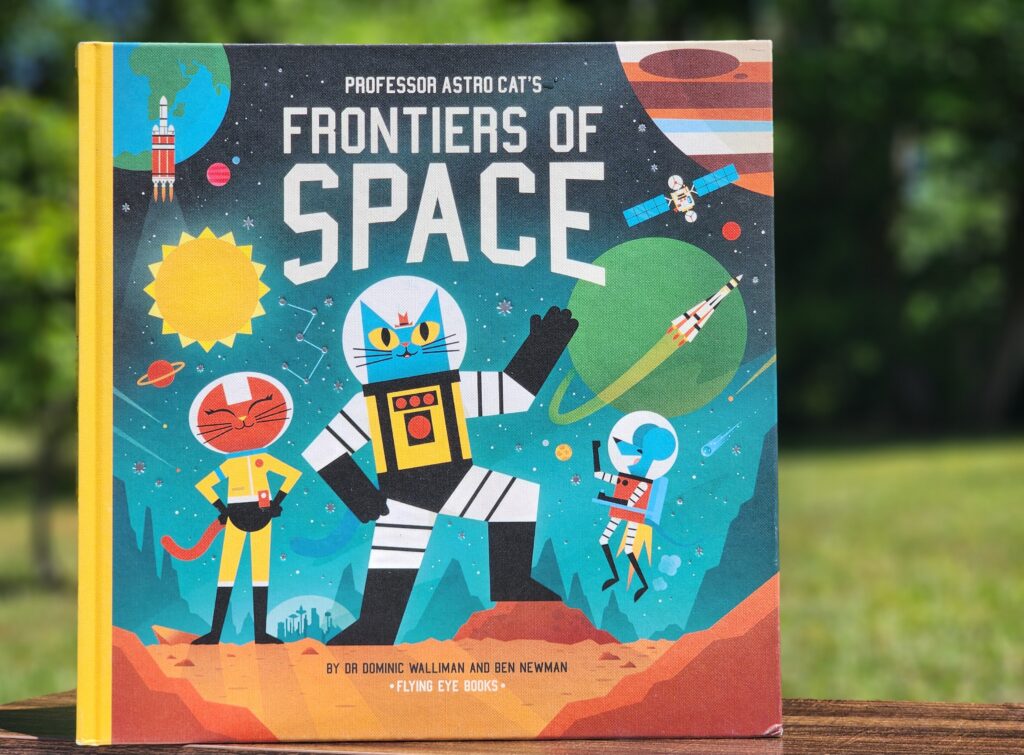
Professor Astro Cat’s Frontiers of Space by Dr. Dominic Walliman
This series is one of my absolute favorites for this age. It explains concepts that kids usually don’t encounter until later, like black holes. It’s age-appropriate but not watered down.
Let your child linger here if they’re interested. This is a book to page through over and over again, even after you read through the whole thing together. If your child likes the formatting, consider other books in the series (all of which I recommend).
What’s Faster Than a Speeding Cheetah? by Dr. Dominic Walliman
This is a great introduction to physics concepts like speed, motion, and comparison. It makes abstract ideas feel concrete.
This is also a great introduction to measurement. After reading, start comparing real-world things, like how fast you run vs. how fast a car goes. Some things are harder to compare with our naked eye, which is when measurement becomes important.
The Elements Trilogy by Theodore Gray
Get these books, but keep your expectations light. This is more of a long-term resource than a read-through book. The visuals are what make it powerful. I’ve included them in the middle school section too, so I plan on coming back to them regularly.
Let your child browse. Flip through it together. This builds familiarity with concepts that will matter much later.
How We Use Science Books at This Stage
Kids will probably start asking more questions at this stage, and it’s important that you run with them. Let your child’s interest determine what science category you dive into next, instead of trying to cover everything.
Keep things conversation-driven. There is no reason to implement quizzes, though memorizing some basic facts is recommended. Knowing the order of the planets, for instance, gives children “hooks” to remember other facts about them.
Always make real-world connections as much as possible, even if you don’t implement formal experiments. You still don’t need formal lessons. I like using the National Geographic science kits at this age. Don’t try to line up experiments with the books you’re reading, though. That just adds a layer of complexity you don’t need!
Regular reading, discussion, and occasional connections are plenty.
If you want a full list of everything we use at this stage, see our complete elementary science booklist.
Best Middle School Science Books (Ages 10–14)
At this point, your children should start understanding science systems that aren’t apparent to the naked eye, and how those systems interact with the world.
Up until this point, science has been mostly visible. It’s learning about stuff we can see. Now, students are ready to dig underneath the surface with cells, atoms, energy, ecosystems, and forces. They’re also ready to learn about ideas that require a bit more patience to understand.
You don’t need to jump into dense textbooks. But you do need to start treating science as a formal subject. At this point, it becomes less something that you can just dabble with and more something to wrestle with.
Remember, these resources are meant to be used in a cycle. So, don’t plan to read something just once.
Our Core Picks
The Way We Work by David Macaulay
This is one of the best “big picture” anatomy books available. It shows how the human body functions as an integrated system, not just isolated parts.
This book is best when read slowly or re-read over a series of months. It’s absolutely one you should revisit regularly, simply because there is a lot of information in there! Remember to discuss, too.
The Lives of a Cell by Lewis Thomas
While this is technically an adult book, it’s short, and I recommend reading through it at this age. It’s a big shift away from “hard” science books and introduces the idea that biology is layered and often surprising. It gives a taste of where science is now and where it is going.
Some parts might feel very abstract, and your child might not get everything. That’s okay. It offers plenty of chances for discussion, and that’s a big reason why I chose it for this list.
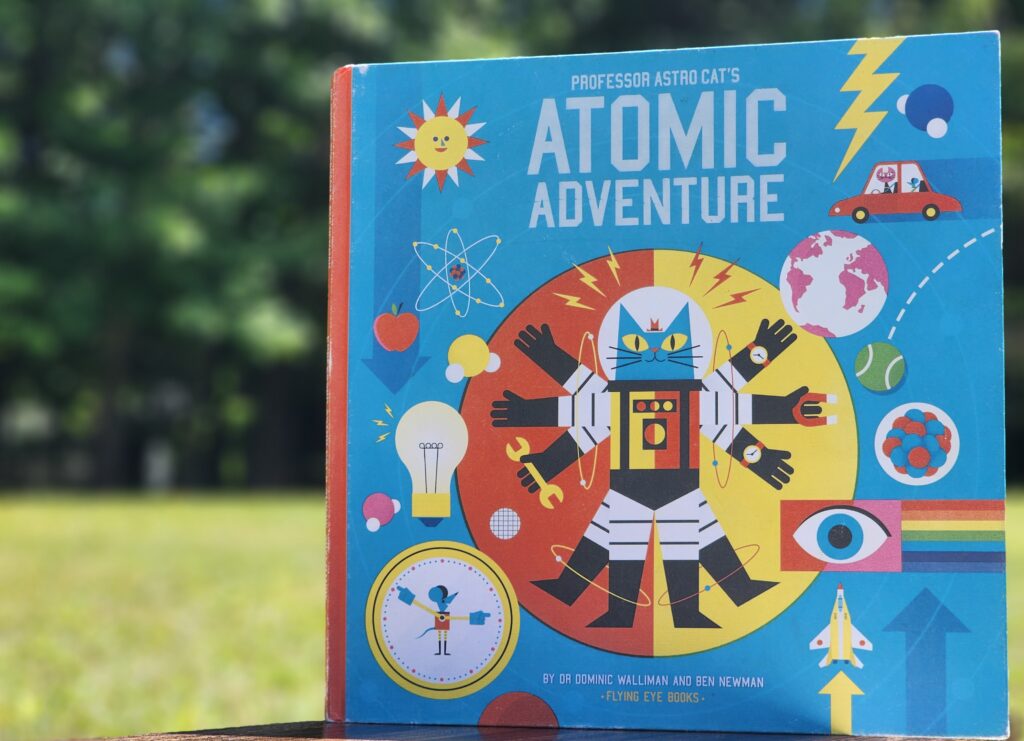
Professor Astro Cat’s Atomic Adventure by Dr. Dominic Walliman
This is the best way to introduce atomic theory and basic chemistry. It makes something invisible feel understandable, and it’s one of the most thorough books I’ve found on these topics for this age.
Let your student take their time here. Re-reading helps. This is a great bridge into more formal science later.
The Way Things Work by David Macaulay
This is where physics becomes practical and visual. It connects machines, energy, and motion in a way that actually makes sense. You don’t necessarily need to read this cover-to-cover. It works well as a browsing book, too. Let curiosity lead.
Chemistry by Carla Mooney
This is a solid first step into structured chemistry. It introduces reactions, elements, and basic concepts without overwhelming the student. Work through it slowly. You don’t need to complete every activity. Focus on understanding the main ideas.
How We Use Science Books at This Stage
This is when science starts requiring a bit more time and attention. Understanding becomes more important, so slow down as needed and fully explore topics. Instead of moving quickly for a “big picture” view of science, spend longer on each idea and revisit as needed. Allow space for confusion and questions!
At this age, you can also expect (and encourage) a bit more ownership. For instance, encourage children to take notes and explain ideas back. Provide time for independent study of topics that interest them, too.
You aren’t aiming for full mastery, but children should be able to start grappling with concept ideas without giving in.
If you want a full list of everything we use at this stage, see our complete middle school science booklist.
Best High School Science Books (Ages 14+)
At this point, science isn’t just about learning concepts. It’s about connecting ideas across subjects, evaluating evidence, and forming a coherent idea of how the world works. You want students to be able to do and review science as they will in adulthood: reading scientific articles, understanding how studies work, and drawing their own conclusions.
For this reason, students should continue reading real books. Not simplified summaries. Not watered-down explanations. Actual arguments, narratives, and big ideas.
You’re moving into “what does this mean?” Not just “how does this work?”
Our Core Picks
Cosmos by Carl Sagan
This is one of the best introductions to science as a unified story. It connects astronomy, history, biology, and human discovery in a way that feels meaningful. This book explores tons of different topics, like consciousness and space.
This works best as a slow read. Talk about it. Reflect on it. This is less about memorizing facts and more about shaping how a student sees science.
The Gene by Siddhartha Mukherjee
A deeper look at genetics, identity, and the ethical questions surrounding science. This is where biology becomes personal and philosophical. It’s about one of the most crucial pieces of science of our time – gene editing. While it won’t go through all the pieces of anatomy a high school course will, it’s a great example of how science really works.
Some sections are dense. That’s expected. Read in smaller chunks and discuss. This is a great opportunity to introduce real scientific complexity.
Six Easy Pieces by Richard Feynman
This book is taken from several lectures given by Feynman in the 60s. It still holds as one of the most accessible introductions to physics, working through everything from atoms to quantum mechanics. It teaches these ideas and how to think about them. Great for all students, whether they like physics or not.
Take your time here and re-read sections. This book is mercilessly short, but that doesn’t mean it should be spending most of its time on a shelf. Inside, you’ll find everything you need for a high-school level physics course.
A Short History of Nearly Everything by Bill Bryson
This book ties everything together: people, discovery, and the people behind it. It helps students see that scientific knowledge develops over time. It’s a great way to cover gaps, too, and it touches on topics across fields, not just in science.
The Beak of the Finch by Jonathan Weiner
A powerful, real-world example of evolution in action. It shows how scientific ideas play out over time through observation and data. This book is mostly a narrative account of science unfolding in real time. It’s a great way to show students that science is an ongoing process, not a finished set of answers.
Astrophysics for People in a Hurry by Neil deGrasse Tyson
This is a fun book to include in high school, especially if your child likes science. I would consider it optional, though. It’s quicker and more conversational, though it still covers big space concepts. I recommend it for reinforcing or reviewing ideas, especially after working through the other books above.
How We Use Science Books in High School
In high school, you should no longer be guiding every step. Instead, you’re shifting your children towards reflection and independent thinking. It’s about looking at the evidence, discussing it, and drawing conclusions.
Often, this looks like reading large sections of books at a time and encouraging them to question what they’re reading. Discuss main ideas and consider the validity of claims. You should be teaching your child not to take everything at face value.
This stage is also when writing becomes important. Short reflections and simple essays teach children how to think about science, and that’s really what we’re aiming for.
At the end of the day, we’re developing intellectual independence, the ability to evaluate ideas, and a coherent understanding of the world.
If you want a full list of everything we use at this stage, see our complete high school science booklist.
How to Build a Simple Homeschool Science Plan (No Textbook Required)
You don’t need a full curriculum to teach science well.
In a literature-rich homeschool, a simple rhythm built around good books, real-world observation, and a little consistency can carry almost everything. The goal isn’t to “cover” science. It’s to help your child notice, ask questions, and slowly build understanding over time.
If you’ve been feeling stuck or overwhelmed, start here.
A Simple Weekly Rhythm
Most weeks, our science looks something like this:
- 3–4 days reading (short sessions)
- Same-day narration (verbal discussion, drawing, or quick notes)
- 1–2 observation opportunities (woven in, not forced)
- Optional experiment when it fits naturally
That’s it.
No complicated schedule. No constant prep. Just a steady rhythm that repeats week after week.
What This Actually Looks Like
Reading days (most days)
Choose one strong science book and read a short section together. This might be a few pages, a chapter, or even just a picture book, depending on age.
Short and consistent works better than long and occasional.
You don’t need to quiz or assign anything. If your child starts asking questions, you’re doing it right. Focus more on discussion and curiosity, less on your children remembering specific things.
Narration (same day, right after reading)
Have your child tell you what they remember.
This can be:
- A quick verbal recap
- A simple drawing
- A labeled sketch
- A few sentences (for older kids)
No worksheets. No pressure. Just processing.
Observation (woven in, not scheduled)
Take science off the page when it naturally comes up.
- Notice birds while outside
- Talk about clouds on the way to the store
- Watch water boil, freeze, or evaporate
- Connect what you read to real life
You don’t need a designated “science walk” for this to work.
Optional experiment (when it adds value)
If an experiment fits naturally, add it. If it doesn’t, skip it.
Books do most of the heavy lifting. Experiments are reinforcement, not the foundation. process what they’ve learned. I like to buy the National Geographic kits and work through those over the course of a few months. Don’t feel the need to do this every day, just once a week or so.
This simple structure works because:
- Frequent reading builds familiarity
- Immediate narration builds retention
- Real-life observation builds understanding
You don’t need a complicated system when those three are in place.
If you get off track, just pick the book back up and keep going. There is no reason to “stay on track” or try to catch up. Science doesn’t require the same level of consistency as math or reading to be effective. A good book and a few conversations are more than enough.
If you want to build your entire homeschool this way, not just science, start with the best homeschool books hub where I break everything down by subject and stage.
If You’re Overthinking Science, Read This
If science feels complicated in your homeschool, it usually means you’re trying to do too much. You don’t need a full curriculum. You don’t need to cover every topic. You don’t need to run constant experiments or keep up with a rigid schedule.
You need a good book, a little consistency, and the willingness to follow your child’s curiosity when it shows up.
Read a few pages. Talk about it. Notice something in real life. Then do it again a few days later.
Most of the pressure around homeschool science comes from the idea that you have to “keep up” or “stay on track.” But science doesn’t really work that way. Understanding builds slowly, through repeated exposure and simple connections over time.
If your child is asking questions, noticing things, and starting to connect ideas, you’re not behind. You’re doing it right.
Frequently Asked Questions about Homeschool Science
Can you homeschool science without a curriculum?
Yes, especially in the early and elementary years.
Many families successfully teach science using living books, simple observation, and conversation. A strong science book, read consistently, can cover far more than most people expect, especially when paired with real-world experiences.
As students get older, you may choose to add more structured resources. But books can remain the backbone of your science plan at every stage.
Do I need to do experiments to teach science?
No.
Experiments can be helpful, but they are not required for learning. In many cases, they become stressful or overly complicated without adding much understanding.
Books, narration, and real-world observation do most of the heavy lifting. If an experiment fits naturally, use it. If not, you’re not falling behind.
How often should we do science in homeschool?
A little often works better than a lot, occasionally.
In most homes, 3–4 short reading sessions per week are more than enough, especially when paired with quick narration and everyday observation. Even 10–15 minutes at a time builds real knowledge over time.
Consistency matters more than duration.
What are the best science books for homeschooling?
The best homeschool science books are:
- written by someone who understands and enjoys the subject
- engaging enough to hold your child’s attention
- clear without being overly simplified
- strong enough to stand on their own without worksheets
Narrative science books, nature study books, and biographies of scientists are often the most effective.
If you’re just starting, pick one good book from this list and begin there.
Should science be read aloud or done independently?
Both, but read-alouds are more powerful than most people expect.
Younger children benefit almost entirely from shared reading. Older students can read independently, but still gain more from discussion and occasional read-alouds, especially with complex topics.
Even in middle and high school, reading together can deepen understanding significantly.
How do I teach science to multiple ages at once?
Start with shared reading.
Choose books that work across age levels and read them aloud together. Younger children absorb vocabulary and ideas, while older children engage with deeper concepts.
You can adjust expectations:
- younger kids narrate simply or draw
- older kids explain in more detail or write
Multi-age science is often simpler than trying to teach each child separately.
What if my child isn’t interested in science?
Start with a different angle.
Instead of forcing a topic, try:
- animals
- space
- the human body
- inventions or real-life stories
Science is a wide field. There is almost always an entry point that sparks curiosity.
If interest is still low, shorten sessions and keep things light. Curiosity often grows slowly, not all at once.
How do I know if we’re doing “enough” science?
This is one of the most common concerns, and usually unnecessary.
If your child is:
- hearing good science books regularly
- asking questions
- noticing things in the real world
- able to explain basic ideas
…then you are doing enough.
Science doesn’t need to be constant or heavy to be effective. A steady rhythm over time builds far more than occasional intense study.
When should I switch to a formal science curriculum?
Usually later than you think.
Many families begin adding more structured science in middle or high school, especially for subjects like chemistry or physics that benefit from sequential instruction.
But even then, books can remain a core part of learning. A curriculum can support science, not replace the role of good reading.
Can this approach prepare my child for high school science?
Yes.
A strong foundation built through books, narration, and observation develops:
- vocabulary
- comprehension
- curiosity
- critical thinking
These are the exact skills students need when they move into more formal science later.
Students who understand ideas tend to do better than those who only memorize them.
Bottom line
You don’t need a complicated curriculum to teach science well.
A few strong books, read consistently, paired with simple observation and conversation, can build a deeper understanding than most rigid programs. Science in a homeschool doesn’t have to feel overwhelming or prep-heavy to be effective.
If your child is curious, asking questions, and starting to connect ideas to the real world, you’re already on the right track.
Here’s something most people don’t realize: many professional scientists started with curiosity, not a curriculum. That habit of noticing and wondering is far more valuable than finishing a textbook.
Where to Go Next
If you’re building a literature-rich homeschool, science is just one piece of the puzzle.
These guides will help you round out your book-based approach:
👉 Best Homeschool Books — the main hub with all our favorite booklists by subject and age
👉 Homeschool Reading List (By Grade or Stage) — a complete, stage-based reading plan
👉 Living Books for Homeschooling — what living books are and how to use them
👉 Best Christian Homeschool Books — faith-based reads for every age
You don’t need to overhaul everything at once.
Start with one good book. Add another when you’re ready. Let your homeschool grow from there.
That’s how a strong, sustainable homeschool is built.
We may earn affiliate income (at no extra cost to you) on the links above.